- What Is an ERP System?
- How Does an ERP System Work?
- Signs Your Business Needs an ERP System
- Types of ERP Systems
- Cloud ERP
- On-Premise ERP
- Hybrid ERP
- How to Choose the Right ERP System
- What Makes a Great Cloud Accounting Solution?
- Manzuma AI: A Smarter ERP Experience
- Why Businesses Choose Manzuma AI
- Why Native Arabic ERP Systems Matter
- The Future of ERP and Artificial Intelligence
- Manzuma AI Business Solutions
- Industries That Benefit from ERP Systems
- The Real Business Value of Manzuma AI
- FAQs
- What is the difference between ERP and traditional accounting software?
- Is ERP suitable for small businesses?
- How long does ERP implementation take?
Does your company struggle with scattered data across different departments? Is it difficult to keep track of inventory, calculate profits accurately, or connect sales activities with your accounting records? If so, it may be time to understand what an ERP system is and how it can transform the way your business operates.
In today’s fast-moving business environment, relying on spreadsheets or disconnected software solutions is no longer enough. Companies need a centralized system that provides real-time visibility, streamlines operations, and supports growth. That’s where Enterprise Resource Planning (ERP) systems come in.
What Is an ERP System?
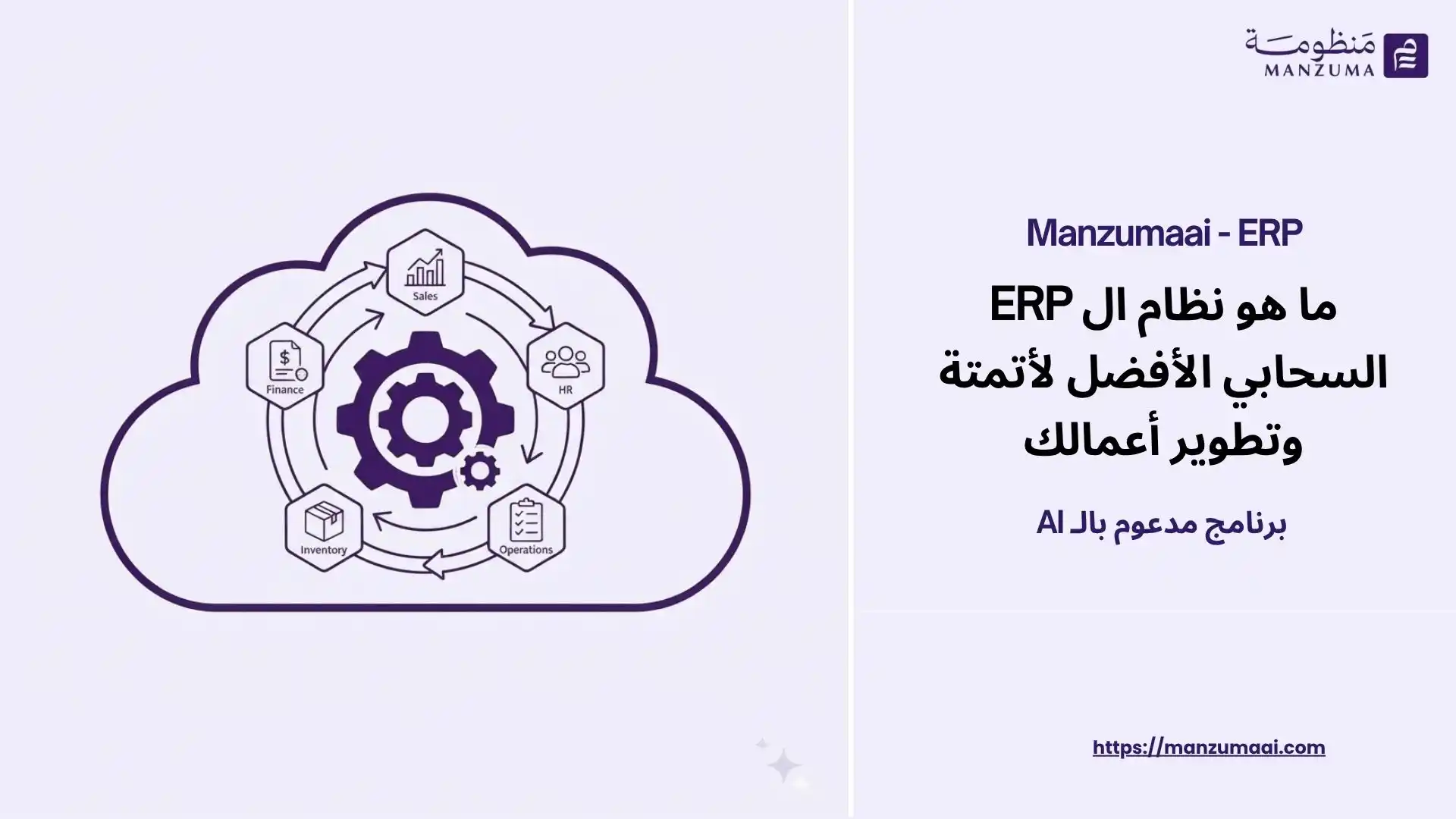
ERP stands for Enterprise Resource Planning. Think of it as the central nervous system of your business. It is an integrated software platform that collects, stores, manages, and analyzes data from every major business function in one unified database.
Rather than having separate systems for accounting, inventory, sales, purchasing, and human resources, an ERP system connects everything together, allowing information to flow seamlessly across departments.
How Does an ERP System Work?
The primary purpose of ERP software is to eliminate data silos between departments.
Imagine a company operating without an ERP system:
- The sales team sells a product.
- The warehouse team is unaware that stock levels have changed.
- The accounting department waits for paperwork before recording revenue.
With an ERP system, all of these actions happen automatically the moment a sales invoice is created:
- Inventory quantities are updated instantly.
- Revenue is recorded in the accounting system.
- Cost of goods sold is calculated automatically.
- Customer balances are updated if the sale is made on credit.
As a result, management gains a complete, real-time view of business performance from a single source of truth.
Signs Your Business Needs an ERP System
Many companies continue using outdated processes long after they have outgrown them. If any of the following challenges sound familiar, it may be time to consider ERP software:
Multiple Disconnected Systems
Using separate tools for accounting, sales, and inventory often creates inconsistencies, duplicate data, and reporting challenges.
Delayed Financial Reporting
If preparing financial statements or profit-and-loss reports takes days or weeks instead of minutes, your business lacks real-time visibility.
Customer Service Issues
Late deliveries, unexpected stock shortages, and invoicing errors can negatively impact customer satisfaction.
Tax Compliance Difficulties
Managing tax filings and e-invoicing requirements manually increases the risk of mistakes and penalties.
Excessive Manual Data Entry
Employees spending hours transferring information between spreadsheets and software systems often leads to inefficiencies and human error.
Types of ERP Systems
ERP solutions generally fall into three main categories:
Cloud ERP
Cloud ERP is the most popular option today. The system is hosted online and accessed through the internet.
Benefits include:
- No expensive server infrastructure
- Lower upfront costs
- Automatic updates and maintenance
- Access from anywhere and on any device
- High levels of security and reliability
On-Premise ERP
This type of ERP is installed on servers located within the company’s facilities.
It typically requires:
- Significant hardware investment
- Internal IT resources
- Ongoing maintenance and backup management
Large enterprises with specialized security requirements often choose this option.
Hybrid ERP
Hybrid ERP combines both approaches, keeping sensitive information on internal servers while managing other operations through cloud services.
How to Choose the Right ERP System
Selecting the right ERP solution is a strategic decision. Before investing, consider the following factors:
Define Your Requirements
Identify the departments and processes you want to automate, as well as the challenges you need to solve.
Ensure Local Compliance
Choose a system that supports local tax regulations and labor requirements.
Prioritize Ease of Use
A complicated system can lead to poor adoption rates. User-friendly interfaces improve productivity and reduce training time.
Look for Scalability
Your ERP solution should grow with your business and support future expansion.
Test Before You Buy
Always request a trial or demo to evaluate how well the system fits your workflows.
What Makes a Great Cloud Accounting Solution?
A modern accounting platform should do much more than record transactions. The best solutions offer:
- Full integration with sales and inventory
- Automated financial reporting
- Tax compliance support
- Intelligent automation that reduces manual work
This is where Manzuma AI stands out in the Arab market.
Manzuma AI: A Smarter ERP Experience
Manzuma AI is more than a traditional accounting application. It is a fully integrated cloud-based business platform powered by artificial intelligence.
Designed specifically for businesses in the region, it combines accounting, inventory management, sales operations, purchasing, and workforce management within one intelligent ecosystem.
By reducing repetitive tasks and delivering actionable insights, Manzuma AI helps businesses improve efficiency and make better decisions faster.
Why Businesses Choose Manzuma AI
Built for Arab Businesses
The platform is designed around local business practices rather than being a simple translation of foreign software.
AI-Powered Automation
Artificial intelligence helps analyze data, identify patterns, automate routine tasks, and support decision-making.
Complete Business Integration
Sales, inventory, accounting, and HR work together within a single environment.
Scalable Cloud Infrastructure
Whether you're a startup or a growing enterprise, the platform scales alongside your business.
Unified Dashboard
Monitor all business activities through one centralized dashboard.
Self-Learning Academy
Training resources help employees become productive quickly with minimal onboarding effort.
Automated Tax Compliance
The platform supports electronic invoicing requirements and regulatory compliance standards such as ZATCA.
Enterprise-Level Security
Advanced encryption, daily backups, and isolated databases protect your business data.
Local Arabic Support
A dedicated Arabic-speaking support team is available whenever assistance is needed.
Real-Time Notifications
Stay informed with instant alerts for important financial and operational activities.
Multi-Device Accessibility
Use the system from desktops, tablets, or smartphones wherever you are.
Why Native Arabic ERP Systems Matter
Many businesses in the region use software that has simply been translated into Arabic. While this may appear sufficient on the surface, it often creates usability challenges.
A truly Arabic ERP platform understands:
- Local accounting terminology
- Regional business workflows
- User expectations and cultural preferences
This leads to faster adoption, shorter training periods, and higher productivity.
The Future of ERP and Artificial Intelligence
ERP systems are evolving beyond data management platforms. Modern solutions increasingly use artificial intelligence to:
- Predict sales trends
- Detect unusual transactions
- Automate repetitive processes
- Deliver business insights in real time
Investing in an AI-powered ERP solution today helps businesses stay competitive tomorrow.
Manzuma AI Business Solutions
Manzuma AI offers a complete suite of business management tools, including:
- Financial Accounting and Financial Management
- Sales and Point of Sale (POS) Management
- Inventory and Warehouse Management
- Purchasing and Supplier Management
- Human Resources and Payroll Management
Together, these modules provide businesses with a unified platform for managing operations efficiently.
Industries That Benefit from ERP Systems
ERP software can be customized to serve a wide range of industries, including:
- Retail and Wholesale Sector: Such as supermarkets, clothing stores, electronics shops, and pharmacies, through fast POS systems, real-time inventory management, sales tracking, and product and branch performance analysis.
- F&B and Hospitality: Through table and order management, recipe and ingredient tracking, inventory control, and reducing raw material waste to improve profitability.
- Manufacturing: Through production planning, raw material management, manufacturing order tracking, quality control, production cost calculation, and improving operational efficiency from production to the final product.
- Construction and Contracting: Through project management, tracking costs and expenses using cost centers, contract management, resource monitoring, and improving control over project timelines.
- Service: Through organizing daily operations, managing customers and contracts, tracking invoices and payments, scheduling tasks, and enhancing service delivery efficiency.
- Healthcare: Through managing appointments and administrative operations, tracking invoices and payments, organizing medical inventory, optimizing resource management, and providing a comprehensive view that improves the efficiency of healthcare facilities.
The Real Business Value of Manzuma AI
Implementing Manzuma AI can help businesses:
- Reduce software costs by replacing multiple systems with one platform
- Increase employee productivity through automation
- Improve financial and regulatory compliance
- Monitor operations remotely from anywhere
- Make data-driven strategic decisions
- Minimize manual errors
- Test the system before committing through trial options
Final Thoughts
Understanding what an ERP system is represents the first step toward more efficient business management.
Moving to an intelligent cloud-based ERP platform is not simply a technology upgrade. It is a strategic investment that improves visibility, increases efficiency, and supports long-term growth.
With its Arabic-first design, AI-powered capabilities, and comprehensive business management tools, Manzuma AI provides organizations with everything they need to thrive in a competitive digital economy.
Ready to simplify your operations and accelerate growth? Discover how Manzuma AI can help automate your business and unlock the full potential of digital transformation today.
FAQs
What is the difference between ERP and traditional accounting software?
Traditional accounting software focuses primarily on financial transactions. ERP systems connect accounting with inventory, sales, purchasing, and HR processes, creating a fully integrated business environment.
Is ERP suitable for small businesses?
Absolutely. Modern cloud ERP solutions like Manzuma AI allow small businesses to start with the modules they need and expand as they grow.
How long does ERP implementation take?
With user-friendly systems, professional support, and proper onboarding resources, businesses can often begin using their ERP platform within a matter of days without disrupting daily operations.
Ready to Organize Your Business?
Try Manzuma free for 14 days — no credit card, no commitment.